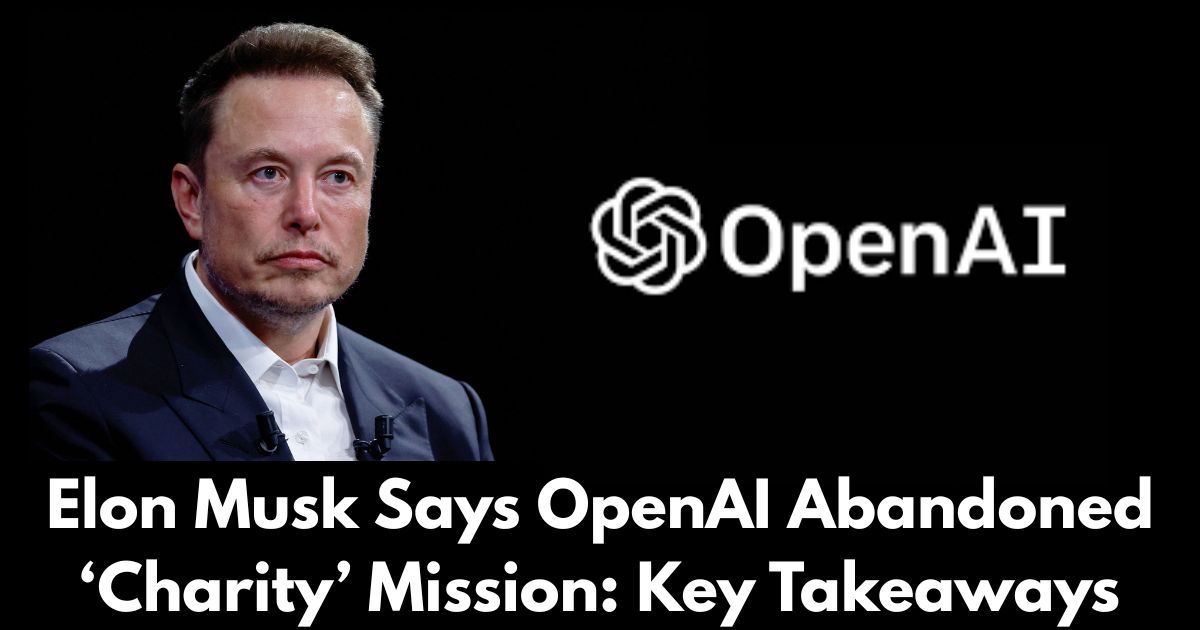
The debate around artificial intelligence took a sharp turn after Elon Musk claimed that OpenAI has moved away from its original “charity” mission. Founded as a nonprofit focused on safe and beneficial AI, OpenAI is now a major player in the commercial AI space. Musk’s testimony has sparked discussions across the tech and business world, raising questions about ethics, profit, and the future of AI development.
What Was OpenAI’s Original Mission?
OpenAI was launched with the goal of developing artificial intelligence for the benefit of humanity. The organization initially positioned itself as a nonprofit, aiming to ensure that AI technologies were accessible and safe for everyone.
However, over time, OpenAI introduced a “capped-profit” model to secure funding and scale its operations. This transition has become the center of criticism, especially from Musk.
Key Takeaways from Elon Musk’s Testimony
1. Shift from Nonprofit to Commercial Model
Musk argues that OpenAI has shifted its focus from a public-benefit mission to a profit-driven structure. This change reflects the growing need for funding in AI development but also raises concerns about priorities.
2. Concerns Over AI Control
Another major point is control over advanced AI systems. Musk has repeatedly warned about the risks of concentrated power in AI development, suggesting that fewer organizations controlling powerful AI could lead to long-term risks.
3. Competition in the AI Industry
The AI race has intensified with companies investing heavily in innovation. OpenAI’s partnerships and commercial strategies are seen as part of this competitive push to lead the global AI market.
4. Ethical and Transparency Issues
Musk’s statements highlight concerns about transparency in AI research and deployment. Businesses and regulators are increasingly demanding clear guidelines on how AI systems are developed and used.
5. Impact on the Future of AI
The testimony reflects a broader debate about balancing innovation with responsibility. As AI becomes more integrated into business operations, the need for ethical frameworks is more important than ever.
What This Means for Businesses
For companies and entrepreneurs, this debate is more than just industry news—it has real implications. Businesses relying on AI tools must consider not only performance but also ethics, data privacy, and long-term sustainability.
Key business insights:
- AI is becoming a core business driver
- Ethical AI practices build trust and brand value
- Transparency is critical for customer confidence
- Competition in AI will continue to grow rapidly
Organizations that adopt responsible AI strategies will be better positioned to succeed in a fast-changing digital economy.
Conclusion
The discussion sparked by Elon Musk highlights a critical moment in the evolution of artificial intelligence. As OpenAI continues to expand its influence, the balance between innovation, profit, and public benefit remains a key concern.
For businesses, the takeaway is clear: AI is not just a technology shift—it’s a strategic transformation. Companies that focus on ethical use, transparency, and long-term value will lead the next phase of digital growth.